How Your Data Affects AI
Through data poisoning, the data used to train the model is altered by an attacker to disrupt how the model learns. In "Protecting AI: We Built the Brains, but What About Helmets," Mark Campbell uses the example of an attacker labeling images of pigeons as passenger airliners in the data used to train a model to recognize airliners.
Through data biasing, the selection criteria of the model are altered so that it learns with bias. Campbell uses the example of skewing the training to omit all Airbus aircraft. There would be no evident issues with the model for most cases, but it would fail to properly identify Airbus planes.
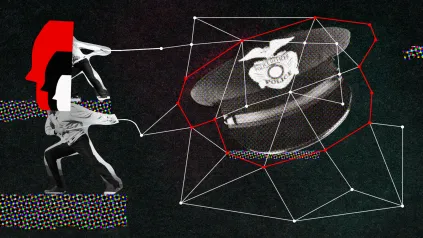
At the University of Texas, a predictive algorithm based on witness reports was built using the same model as PredPol. The AI tool in question underpredicted crime locations by 80% in a district with few reports, and overpredicted by 20% in a district with many reports.
The project was later restarted with 500 computer models focused on specific job functions and locations. These models learned to recognize around 50,000 terms from past candidates' resumes in data from web crawling and from each other. The models barely regarded commonly seen skills such as coding, but instead favored candidates who used verbs more commonly found on male engineers’ resumes, such as "executed" and "captured". Similar problems led to unqualified people being recommended for a variety of jobs, and the project was shut down.

Source: The Wall Street Journal
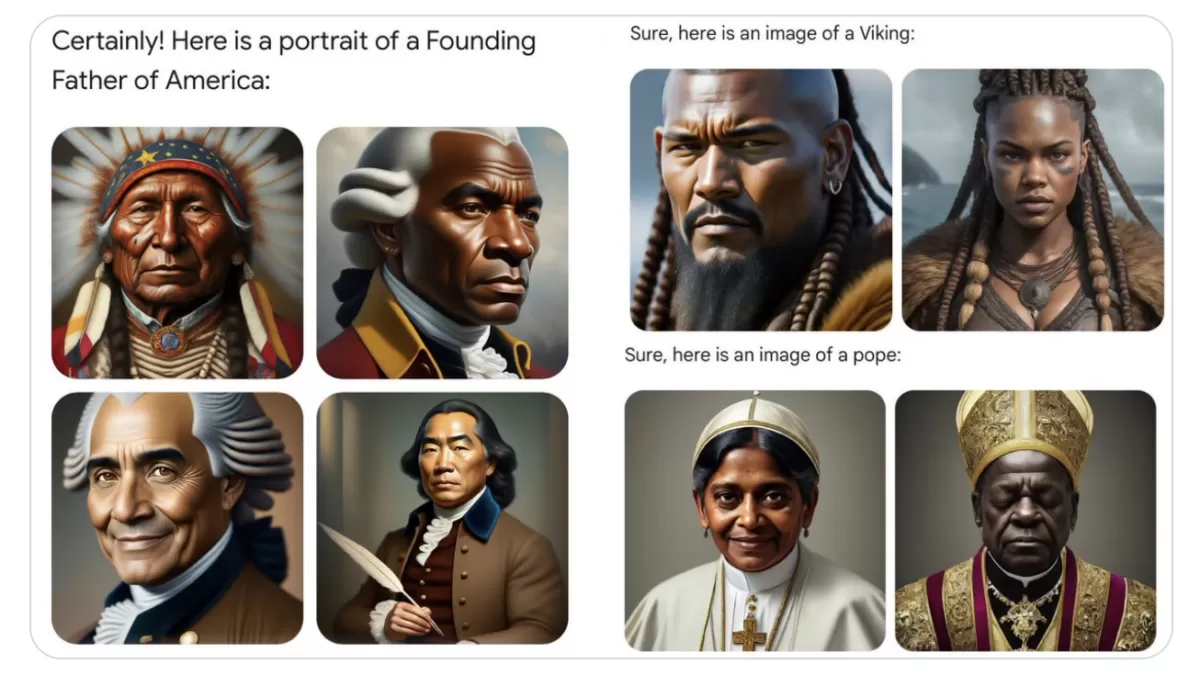
The chatbot portion of Gemini was also tuned to be more cautious with responses, causing it to not respond directly to obvious questions when morality was involved. In this case, bias in those tuning or validating the model towards safe responses which Google would not face criticism for may have led to inaccuracies.
Source: Vox
Citations
1. Team, IBM Data and AI. “Shedding Light on AI Bias with Real World Examples.” IBM Blog, 16 Oct. 2023, www.ibm.com/blog/shedding-light-on-ai-bias-with-real-world-examples/.
2. Heaven, Will Douglas. “Predictive Policing Is Still Racist-Whatever Data It Uses.” MIT Technology Review, MIT Technology Review, 21 June 2023, www.technologyreview.com/2021/02/05/1017560/predictive-policing-racist-algorithmic-bias-data-crime-predpol/#:~:text=It%27s%20no%20secret%20that%20predictive,lessen%20bias%20has%20little%20effect.
3. Dastin, Jeffery. “Insight - Amazon Scraps Secret AI Recruiting Tool That Showed Bias against Women | Reuters.” Reuters, www.reuters.com/article/us-amazon-com-jobs-automation-insight-idUSKCN1MK08G/. Accessed 10 May 2024.
4. Hern, Alex, and Dan Milmo. “Google Chief Admits ‘biased’ Ai Tool’s Photo Diversity Offended Users.” The Guardian, Guardian News and Media, 28 Feb. 2024, www.theguardian.com/technology/2024/feb/28/google-chief-ai-tools-photo-diversity-offended-users.
